
Ok, I know I told my requester that I would post my next article about checklists. Well, here’s the article, but I’m sorry it’s taken so long. In my defense, I’ve just finished finals, moved out of my dorm into my mom’s apartment, my cousin is getting married tomorrow and Christmas is next week. I’ve been in the Thanksgiving-New Year’s slam, and haven’t dedicated much time to this. But still, I’m sorry!!!
Checklists (and why they will save your sanity)
Checklists are the utmost utilitarian organizational tool you will ever come across. If you have a group of things and you need to organize them, be it ideas, tasks or stuff to pack; checklists will be your new best friend. I have been utilizing checklists from a young age, mostly for managing the amount of time I could spend designing terrible fan websites and the amount of time I had to spend on chores before my mom would get home from work. I would put together my tasks, arrange them by highest priority (aka easiest chore to do) to lowest priority and tried to assign a time for completion for each. As I would finish each task, I’d take a “work break,” and check each item off. This brings me to the first wonderful side effect of checklists: the feeling of having done something.
Checklists were always a great motivator for me. When I saw that I had a million things to do in a given day, it would motivate me more to accomplish as much as possible. So, as far as to-do checklists are concerned, no task is too small to list. If you need to take out the garbage, list it; put the dishes away, list it; even walking the dog is a listable item, because once you’ve completed that task and checked it off, you’ll be more inclined to finish your other tasks which you’re less enthusiastic about.
Now, how checklists can apply to study abroad: managing deadlines, saving money and packing.
Managing Deadlines
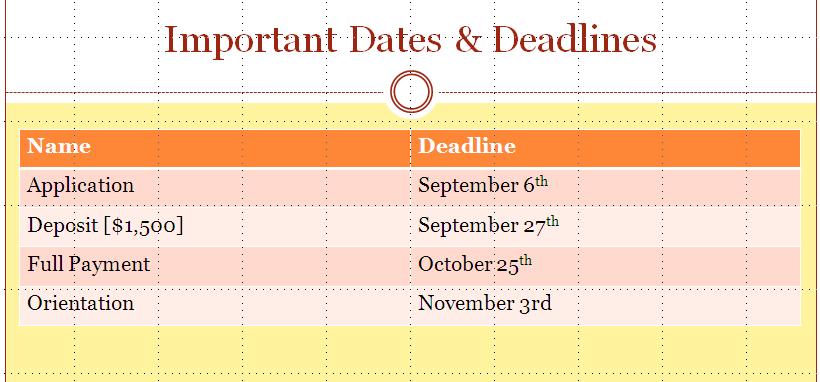
Even before you’re accepted into your program, you will see how important deadlines are. Given that the wonderful people in the education abroad offices spend more time helping students already interested and signed up for studying abroad, they don’t spend much time sending university wide e-mails or promotional mailers to state university students about the opportunities available to them. By the time you have decided you’d like to spend next Spring in Prague, it’s already November and the deadline for Spring applications has passed. You figure that you’ll just submit an application for the following Spring, and then you forget about it, September comes and goes, and you’ve missed it again! A great way to avoid this is to create a checklists of deadlines as soon as you decide you want to study abroad. My checklist looked something like this:
- Application Deadline: 6 September 2010
- Deposit Deadline: 27 September 2010
- Full Payment Deadline: 25 October 2010
- First Day of Housing: 6 January 2011
- Last Day of Housing: 22 April 2011
By having this all organized and laid out in black and white, it made all the dates very tangible for me. I decided I was going to study abroad in June, just missing the Fall deadlines, and had plenty of time to come up with the next kind of checklist.
Money
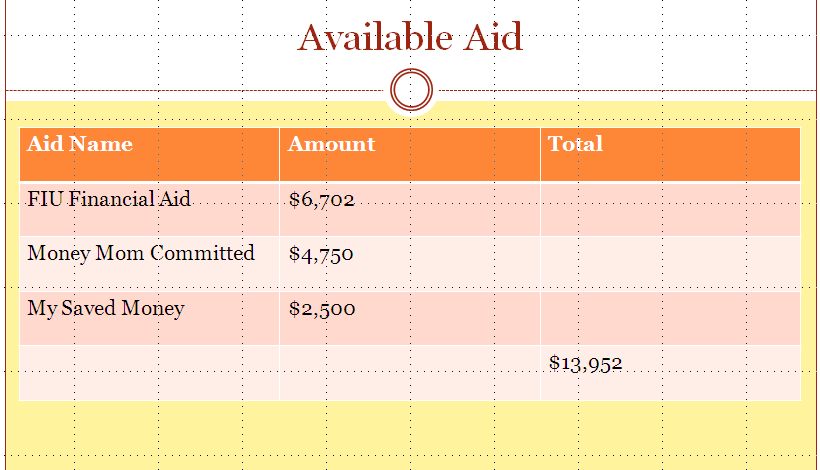
While studying abroad may seem super expensive, it really isn’t out of reach if you save your money and plan out how you’re going to save that money accordingly. I am very fortunate in that my grandmother left me a small sum of money for my education, which I barely touched, and that my mom had just downsized from our 2 bedroom house in the suburbs to a smaller 2 bedroom apartment downtown (I live in an area where living downtown would be cheaper than living and commuting in from the ‘burb). I sat down with my mom and we fleshed out what the appropriate proportions of contribution from everyone would be. I pledged to make $2500 happen over the course of 6 months (needing my deposit in 3), which was no easy task when first laid before me. But I started cutting away at my expenses, putting $150 a week away by not spending on pricey coffee and eating out, and by the end of the three months, I had my full deposit amount ($1500) and a little left over and by December(now), I had paid off my deposit and contributed an additional $1000 towards a much more expensive flight that I hadn’t originally budgeted for. I was amazed that by cutting my habitual 2 frappucinos a day down to one, I saved $25 a week. By buying groceries and cooking instead of eating out all the time, my food expenses went from $200-$250 a week to $60 a week. That’s $190 in found money alone.
How can you achieve this? Quite simply, make a budget. Take your receipts and/or bank statement from the last month and see what you spent most on. Spending more than bus fare on gas and tolls? Try taking the bus to school. Most major cities have an unlimited month pass, and usually with a discounted kind for students. Eat out or order in every or every other night? Know how to use a microwave and/or stove? You can save a bundle by buying your favorite restaurant items in the freezer section at the grocery store. For example: delivery pizza runs about $10 plus tip, but you can get the frozen kind you stick in the oven for about $4 if you go with the store brand. Even if you only order pizza once a week, and you’re in college, so don’t kid yourself, you’d be saving $24 a month on pizza alone. See what you can cut and how much you can put away, if you plan far enough in advance, even something as small as $25 a week can make a huge impact down the road.
Packing
Last, but certainly not least, is the ever essential packing checklist. Be it an easily replaceable like soap to a near-disaster to discover, like forgotten underwear, forgetting things is the worst part of any voyage. No matter how far or close to home I’ve ever traveled, whenever I haven’t made a list, I’ve always forgotten something. The packing list for studying abroad, however, is different than any other list you will make; depending, of course, on how long you’ll be away from home, what time of year you’re studying, and the climate of the region in which you’re studying. I’m going to be away for 4 months, the longest I’ve ever been apart from home without visiting, to a very cold and wet England during the dead of Winter and the beginning of Spring. My list is starting to look something like this:
- Intimates: One week’s worth of bras and panties and two sets of thermals
- Pajamas: One week of sweatpants, t-shirts and warm socks
- Casual: One week of shirts, jeans, skirts and tights
- Dressy: One pair of slacks, two blouses, one blazer, one nice skirt, two tea length dresses, one full length dress, one ball gown
- Shoes: One pair black, brown pumps, three pairs flats, two pairs boots, one pair slippers
- Jackets: One trench coat, one down jacket, one casual blazer
- Home items: One FIU pennant, one photograph of the beach, one small family photo album
- Electronics: One laptop, one iPod, one digital camera, one film camera, one cell phone
I know you’re thinking, what about essentials like soap, toothpaste, etc? I’ve found that when I travel abroad, it’s far better to buy toiletries and sundries once you’re at your destination.
So there you have it, the lesson on checklists. The more organized you are, the easier your trip will be, and the more enjoyable your experience will be. Happy listing!
XOXO
Savannah

 Voyagons