
Budapest is definitely one of my favorite cities in Europe. I had the serendipitous fortune of having plans with someone fall out at the last minute a few years ago, and rather than visiting that friend in Stockholm, I was able to switch things up and check out this beautiful city. Before I go into my suggested itinerary, I would highly recommend anyone visiting Budapest for the first time to get a Budapest City Card (available here or at their tourism office in the city center). Not only do you get a free admittance to 12 of the best museums and the thermal baths, but having one also gives you free rides on their public transport for the duration of the card (you can buy increments of 24, 48 or 72 hours). So take a look at my suggested itinerary below for tackling the best of Budapest in just 3 days.
Hostel Recommendation: Maverick Hostel
Day One
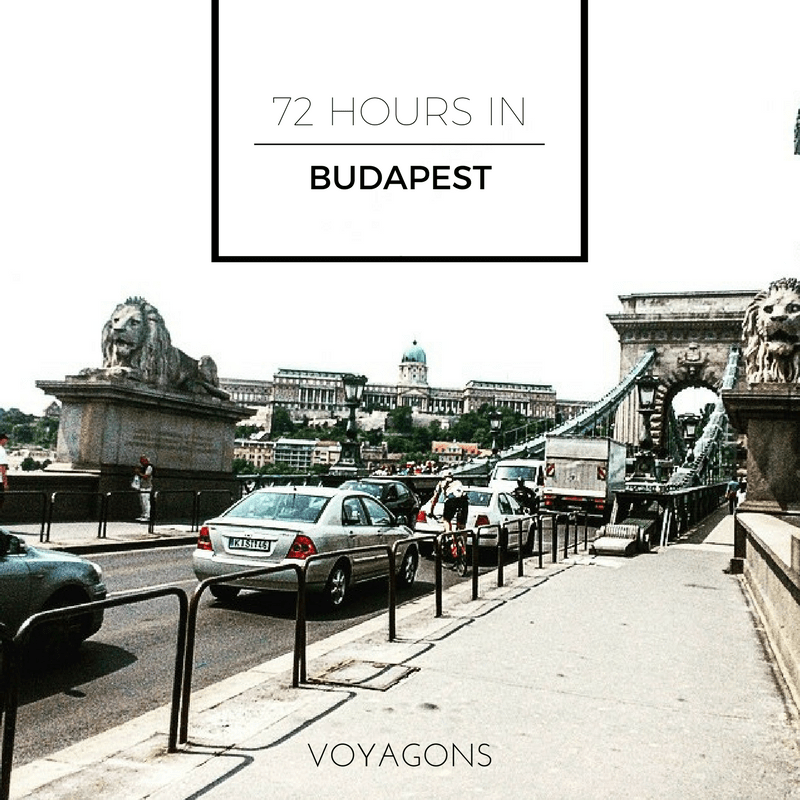
7:30 Make sure to walk across the Chain Bridge (pictured on the social media graphic at the bottom of the post). It is one of the most beautifully decorated bridges in all of Europe.
8:00 Climb to the top of Castle Hill for one of the best views of the City. You have the option of walking up (It is a hike, so I wouldn’t recommend this for folks who aren’t in great shape or who may have difficulty navigating steep slopes and many, many flights of steps) or taking the funicular
9:00 Check out the Buda Castle. There’s a ton to do here, not just in the castle proper (which has an awesome history of the city and Hungary as nation/empire) but in the entire area at the top of the hill. Walking through the castle and looking at the exhibits should take about an hour and a half to two hours. Also, near the castle make sure to find the Liberty Statue, a monument to those who lost their lives in WWII.
11:00 Besides the wonderful history museum housed in the castle, there is also a fantastic art collection on display at the Hungarian National Gallery. If you didn’t grab a bite beforehand, there’s a marvelous little cafe inside the gallery that has top notch pastries and other snacks. I believe you get free admittance with the Budapest City Card to the MNG, so definitely take advantage of this if you can.
13:00 Take a break from the overwhelming history of the Hungarian people by having a traditional Hungarian buffet lunch. There’s a cafe not too far away from the castle (still on the hill) called Vár Bistro that serves a delicious multitude of options for a filling, quick lunch stop.
14:00 Before heading down from the hill, make sure to go over to Fisherman’s Bastion. There is a small charge (I think it was like 2000 HUF) to go up on the battlements, but the views are worth every penny (see my terrible selfie below).

15:00 Take some time to amble along the river bank on the Buda side of the Danube. There are some lovely parks right along the river bank. If you’d like to take a dip in Budapest’s famous thermal baths, there’s one at the base of the hill called Gellert Baths. It can be wonderfully relaxing after all of that walking!
17:00 Grab some gelato (there are plenty of stands all over the base area of the hill) and get ready for another climb. Head toward the Elisabeth Bridge and rather than crossing it to Pest, turn the opposite way toward the green hill. At the top of this hill stands Citadella, a Hungarian fortress dating back to the revolution in 1848. The castle itself reflects classic Hungarian architecture with a large copper dome and it an impressive landmark. But what is even more beautiful is the view from the top of the hill. If you want to snap some photos of sunset over Budapest, this is the best spot to do so. Explore the green space to your heart’s content.
19:30 Before calling it a night, stop by the famous Cafe Gerbaud for dinner and a glass of Tokaji (Toh-kahj), the traditional (and delicious!) Hungarian white wine.
Day Two
10:00 We’re starting off a little later today because I end the day later, feel free to adjust this based on your preference for going out. After spending an entire day in Buda with castles, I thought I’d steer you toward a completely different part of the city. We’re going to check out the easterly part of Pest, starting at Hero’s Square. This area is a dedicated UNESCO Heritage site meant to honor the many Hungarian heroes who’ve fought the many invading forces and who’ve ruled over the vast Hungarian empire. It’s a visually stunning and overwhelming site and I recommend taking some time to take in the whole square.
11:00 Flanking either side of Heroes’ Square are two fantastic museums: The Museum of Fine Arts and the Budapest Hall of Art. When you’re a civilization that dates back to the late 9th Century, you have a lot of time to collect and develop a lot of art. Take your time in both of these fantastically curated museums before venturing on.
14:00 If you don’t stop for a bite in the museum’s cafe, I would recommend lunching at Robinson. It’s right along the lake in the park behind Heroes’ Square and lunch tends to be a little more affordable than their dinner options.
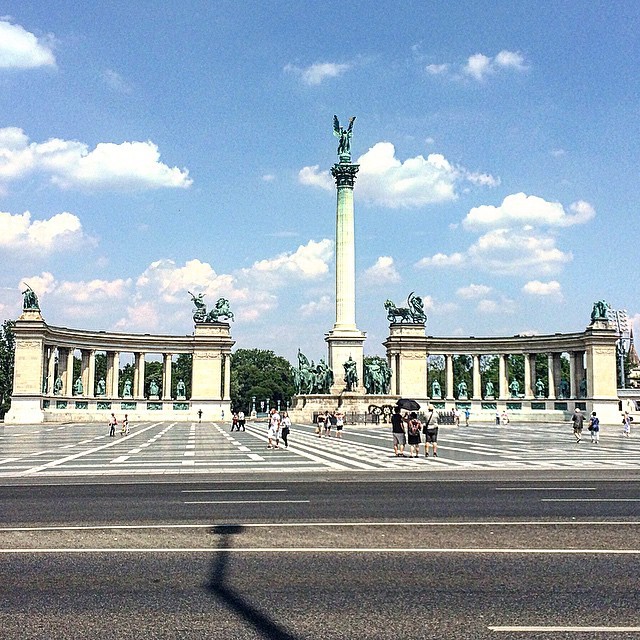
15:00 Once you’ve had your fill for lunch, head to the green space behind Heroes’ Square. This is one of the largest dedicated green spaces in Budapest called Varosliget, or City Park. There is so much to explore in this park and there is always something to do regardless of season. If you’re visiting in the colder months, definitely check out the ice rink, they charge a small admission fee and even offer skate rentals so you don’t have to remember your own. If you’re visiting in the warmer months, there are a plethora of castles to meander through, the most prominent of which is the Vajdahunyad; this is a castle which was built in 1895 to celebrate a millennium of Hungarian history and culture. However, the crown jewel of City Park can be visited year round: The Budapest Zoo and Botanical Gardens. The zoo boasts a fantastic collection of both domestic and exotic animals and the gardens are absolutely stunning.
18:00 When you’re ready for dinner, head back toward the city center to Cafe Kor. They deliciously combine classic Hungarian flavors with a variety of gourmet cooking techniques. And best of all is that it’s all very reasonably priced.
20:00 One thing Budapest is most well known for are it’s ruin bars. These are bars and clubs that have been built into abandoned buildings; think dilapidated Hapsburg-era manses, out of use factories, etc. While I was in Budapest, I had a fantastic time drinking and dancing at Morrison’s 2. This is one of the largest ruin bars in Budapest, with six different dance rooms plus an open air garden in the middle of the excavated building it occupies. It’s a great place to catch a football match, dance the night away or just take the edge off of a long day of touristing.
Day Three
8:00 Hopefully you’re not too hungover this morning because we’re heading to one of the most iconic buildings in Budapest, the Hungarian Parliament Building. Situated right along the Danube and built in the instantly recognizable Gothic Revival style, the Hungarian Parliament Building is the centerpiece of Budapest’s skyline. Whether parliament is in session, there are guided tours of the building (lasting about 45 minutes and offered in Hungarian and English) as well as a small museum inside which talks about the history of the building and the legislative body which occupies it. There is a small admission fee which goes toward the upkeep of the building.
10:00 If you’ve had your fill of Hungarian politics, make your way slightly away from the river and back to the Inner City. Along the way, you’ll pass Saint Stephen’s Basilica. Though the interior of this basilica is drab and gloomy, it’s well worth the journey inside and the climb to the top of its dome for the incredible views of the city on the Pest side of the Danube. And the entrance fee to St. Stephen’s is much more reasonable than what they charge at Fisherman’s Bastion!
12:00 The Jewish community in Budapest is one of the largest in Europe, and Jewish people have occupied the city even longer than the Magyar conquerers of the 9th century. Having such a long and storied tradition in Budapest, there is a wealth of information and museums about Jewish history in the Jewish Quarter. The best, in my opinion, is the Great Synagogue. Besides being another architectural marvel of this city, they also boast one of the best Jewish history museums with information about both the history of Jews in Hungary as well as information about how both Orthodox and Reformed Jewish people live their day to day lives. Most stunning, however, is the Tree of Life Memorial, which is a tree that was planted over the mass graves used by the Nazis during WWII. It stands as a living and breathing monument to those who were massacred unjustly during the war.
I would recommend leaving the rest of the day for shopping along Váci Utca or having one last soak in a thermal bath before treating yourself to a nice dinner and getting ready to leave. Budapest is a lovely city which is steeped in history and is definitely the kind of place worth coming back to. Hopefully this itinerary gave you a good taste of what the city has to offer. Until next time!
 Voyagons